
What is a retina?
The retina is the thinnest inner membrane of the eye, like a light veil upon which light falls and in which it turns into signals for the brain. Makula is the central area of the retina (about 5% of the area), responsible for the central part of the picture we see.
What is the danger of retinal disease?
Retinal diseases such as macula dystrophy, retinal lacerations and detachment are considered to be the most dangerous, as they can lead to total and irreversible loss of vision. Early diagnosis is almost the only condition for successful control of retinal diseases. The earlier the disease is detected, the more likely it is to be cured. If the time for therapeutic treatment is lost, surgical intervention will be required. In this case, it is no longer a question of improving vision, but of preserving and stabilizing it at the current level, with little chance of regaining vision.
In the absence of treatment, any retinal disease leads to an irreversible state of rupture and detachment. Retinal detachment leads to total vision loss without the possibility of recovery. That’s why it’s so important to detect retinal pathology at an early stage, before the visual system is irreparably damaged.
What do you know about retinal detachment?
Retinal detachment is the process of detaching the retina of the eye from the vascular casing. Retinal detachment often leads to significant loss of vision and blindness. It is most common in injuries and short-sightedness, as well as in diabetic retinopathy, intraocular tumors, retinal dystrophy, etc.
What symptoms indicate a probability of retinal detachment?
- The appearance of the «veil» in front of the eye;
- Spark and lightning flashes are also a feature of retinal detachment;
- The distortion of the letters, the objects in question, the loss of sight of their individual sections indicate that the detachment has captured the retinal center.
The success of the treatment of retinal detachment depends directly on the timely appointment of a doctor. The sooner the disease is detected and its causes found, the sooner the necessary treatment can be carried out and the better the result. Patients sometimes note that their vision improves somewhat after sleep. This is due to the fact that when the body is horizontal, the retina returns to its place, and when the person takes a vertical position, it again leaves the vascular envelope and the visual defects resume. Retinal detachment can’t be cured with any drops, pills or injections. The only way to restore sight and preserve the eye is to perform an emergency surgery. Retinal detachment kills nerve cells, rods, and cones, and the longer the detachment lasts, the more these cells die, and the worse restoration of vision even after successful surgery.
Is it possible to independently determine if there are problems with the retina?
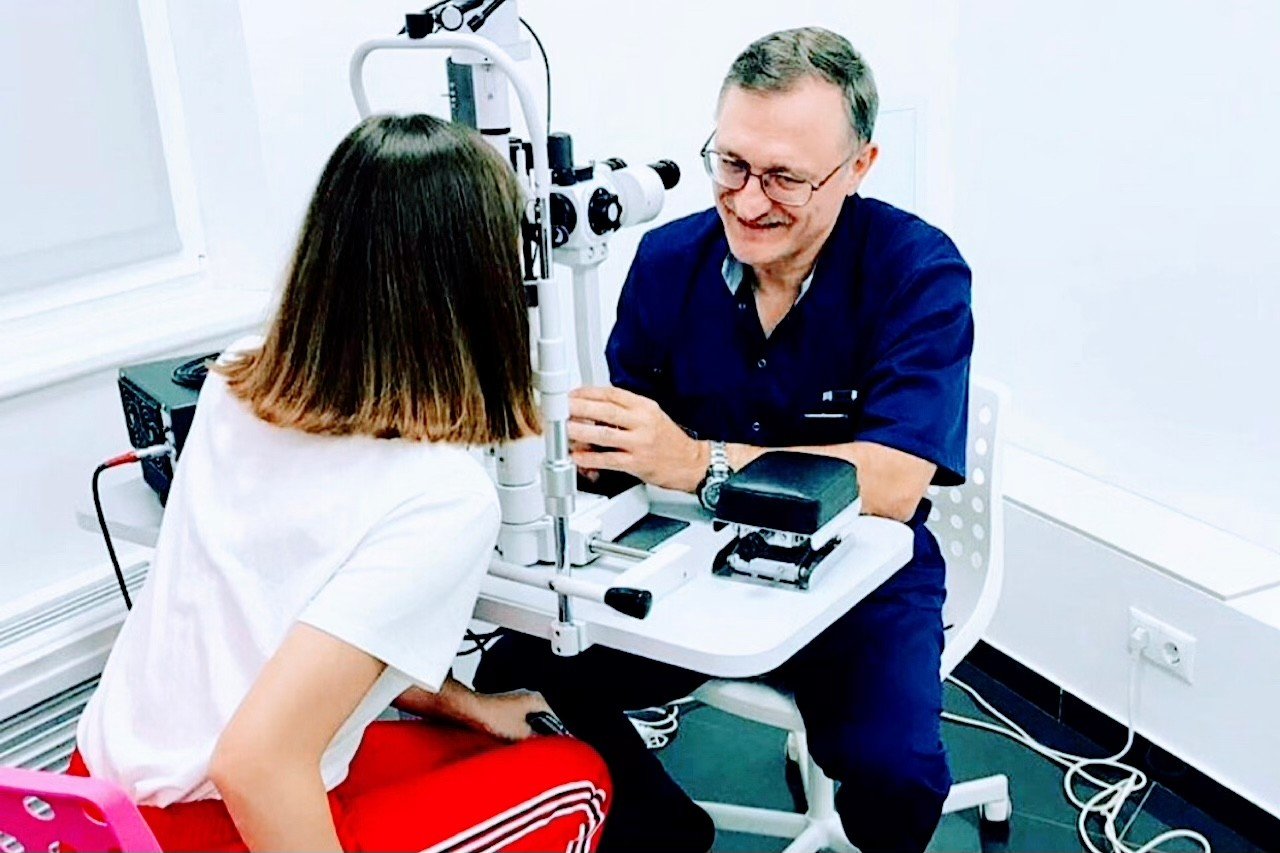
Only a specialist can determine if you have retinal detachment, what your retinal level is, and perform all the necessary tests with the help of state-of-the-art precision equipment.
What categories of patients are at risk of this dangerous disease? At what age do you start to pay attention to this problem?
Patients of different ages are at risk. Of course, one of the causes of retinal diseases is ageing. They are, first of all, patients with vascular vein pathology (DRT, thrombosis), angiomatosis, age maculadystrophy. They are also patients suffering from hypertension, diabetes mellitus, intoxication, atherosclerosis, who have had infectious diseases with acute or chronic diseases. However, young people with short-sightedness, long-sightedness and astigmatism, who have been exposed to infectious and inflammatory eye diseases, injuries with hereditary tendencies, often suffer from retinal thinning. But this diagnosis you may not be aware of. Even in the absence of symptoms, peripheral degeneration is a very dangerous condition. If left untreated, a rupture or retinal detachment may occur due to injury or physical strain (often among athletes and young men at work and at home). If the disease is set in motion, it could end in total vision loss.
Pathological changes in the retina can cause serious vision problems. Eye Microsurgery Clinic offers a minimally invasive and effective method that will help to avoid them – laser coagulation.
